Ford says the 2027 Fathom can power a home without a wall inverter
Ford says the 2027 Fathom starts at $28,350 and can send over a projected 10 kW of AC power to a home without a wall-mounted inverter. TechCrunch and The Verge print different hardware prices, and Ford has not set a final dollar price in its own post.
Last updated
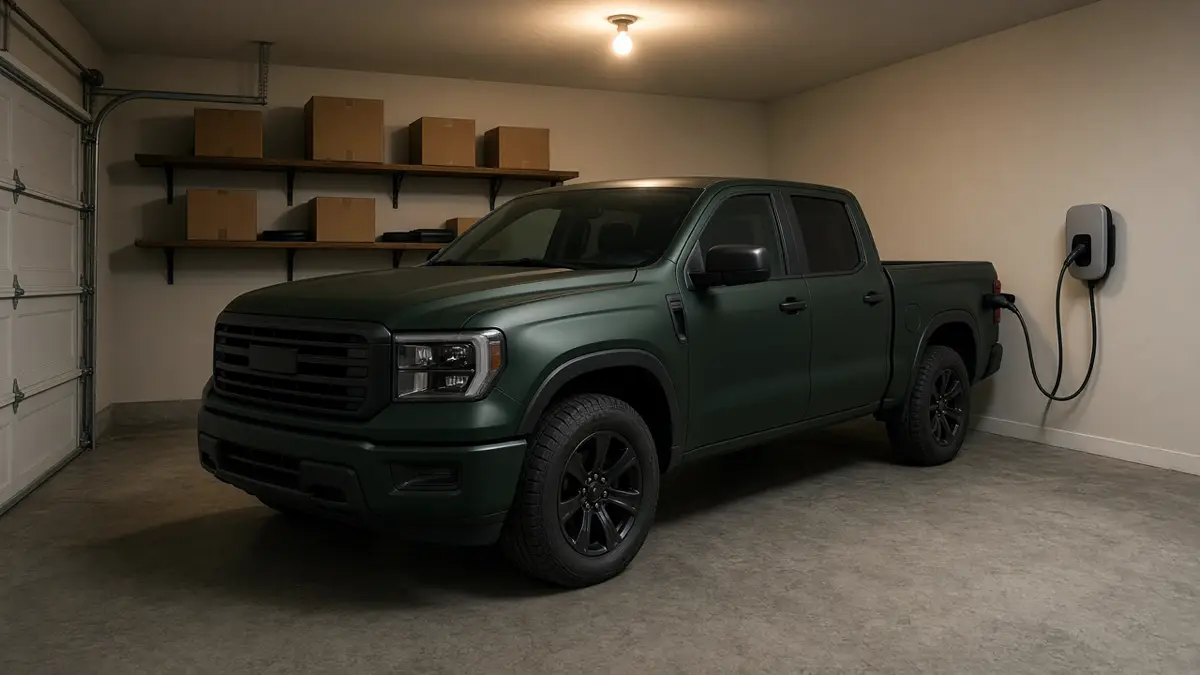
Ford says the 2027 Fathom electric truck will be able to send power into a house without a separate wall-mounted inverter. In a From the Road post dated 27 October 2026, Ford says the truck starts at an MSRP of $28,350 and can supply over a projected 10 kW of alternating-current power to a home. Ford says the truck will be available in 2027.
The post describes bidirectional power as electricity that can flow both ways. Ford says the vehicle takes power in to charge its battery and can send that power back to the home. Ford says electric-vehicle batteries store power as direct current, homes use alternating current, and converting between the two has usually required external equipment such as a home inverter. Ford says that cost has kept the technology with premium vehicles and early adopters.
Ford describes two uses for the truck. For what it calls Home Power Management, Ford says a customer can charge when electricity is less expensive and use the truck to power the home when electricity is more expensive, which Ford says may help lower a monthly bill. Ford says the only hardware required for that use is its Home Power Station, which it expects to cost about half as much as its first-generation bidirectional charger, and that the customer needs an active plan or a trial. For Home Backup Power, Ford says the truck can send power to the home in an outage. Ford calls that a clean, quiet alternative to backup generators that run on natural gas or diesel. Ford says customers will need the Home Power Station and a Home Backup Power Panel, and that the panel is expected to cost at least 60 percent less than Ford's first-generation home backup hardware. Ford says that with bidirectional power on a truck whose MSRP starts below $30,000, more people can use those features. The post does not print a dollar price for either device.
TechCrunch, in a 27 October 2026 story by Tim De Chant, reports the same $28,350 starting price and says Ford said the Fathom will be capable of delivering "over 10 kW" to a home. TechCrunch's headline calls the truck the cheapest American electric vehicle capable of powering a house. That is TechCrunch's description, not a ranking in Ford's post. TechCrunch says the Home Power Station will cost around $650, about 50 percent less than Ford's first-generation bidirectional charger, and that a Home Backup Power package bundling the station with the backup panel will cost around $2,100, about 60 percent less than the first-generation product. TechCrunch says those prices exclude installation. It says installation for existing vehicle-to-everything chargers can run up to $10,000, depending on the electrical work a house needs. TechCrunch says Ford did not announce partnerships with installers, and that a spokesperson told TechCrunch Ford would release more details later. TechCrunch also says both chargers will let Fathom customers take part in virtual power plants. It says Ford did not say how much an owner would be paid.
The Verge, in a 27 October 2026 story by Andrew J. Hawkins, reports that the inverter sits in an onboard unit it calls the "E-box," and that the discontinued F-150 Lightning needed an external inverter. The Verge's article says the truck pumps out over 10 kW of AC power. A line on the same page says the E-box supplies up to 10 kW. This story does not treat those two phrasings as one confirmed rating. The Verge says Ford is targeting a 50 percent discount on the Home Power Station against an existing Ford Charge Station Pro price of $1,310. It says a station-plus-panel combination typically runs around $5,205, and that Ford is aiming for an estimated $3,123, which The Verge calls a roughly 40 percent reduction. The Verge says finalized pricing for both packages is still pending. Those dollar figures are not the figures TechCrunch printed, and they are not dollar prices in Ford's post. Ford's post speaks in shares of the previous hardware: about half for the station, and at least 60 percent less for the backup panel.
The Verge also reports that Ford has worked with Pacific Gas and Electric, American Electric Power, BC Hydro, Consumers Energy, and Exelon, and that they agreed to cut the paperwork for basic storm backup, use common plugs and software, and make grid programs automatic. Ford's post does not name those companies.
Analysis
The truck's starting price and the cut in charger hardware are not the full cost of using the vehicle as a house battery. TechCrunch says the prices it reports leave out installation, and that installation on existing vehicle-to-everything setups can reach $10,000. The Verge says permitting, electrician labor, and heavy-gauge wiring still sit on top of the hardware, and that final package prices are not set. The two outlets also disagree on the hardware dollars. Until Ford publishes a final price and the installer details TechCrunch says are still to come, whether a household can use the feature depends on installation and on the utility connection, not on the $28,350 MSRP alone. That reading is not a forecast, and it is not a recommendation to buy the truck or the hardware.
A separate Charging desk story looks at how this announcement is sitting next to a Tesla Powershare discussion on X. A federal example of home electricity prices, which is not this truck's specification, is in what it costs to charge an electric car at home. Ford's 2027 Mustang Mach-E Trail is a different product story.

More from the Charging desk.