What it costs to charge an electric car at home
EIA's August 2026 U.S. residential average was 18.16 cents per kWh. A FuelEconomy.gov example uses 13 cents and $45.50 a month.
Last updated
This is not financial, tax, or investment advice. It is a report. Confirm the figures with the cited source and a qualified adviser.
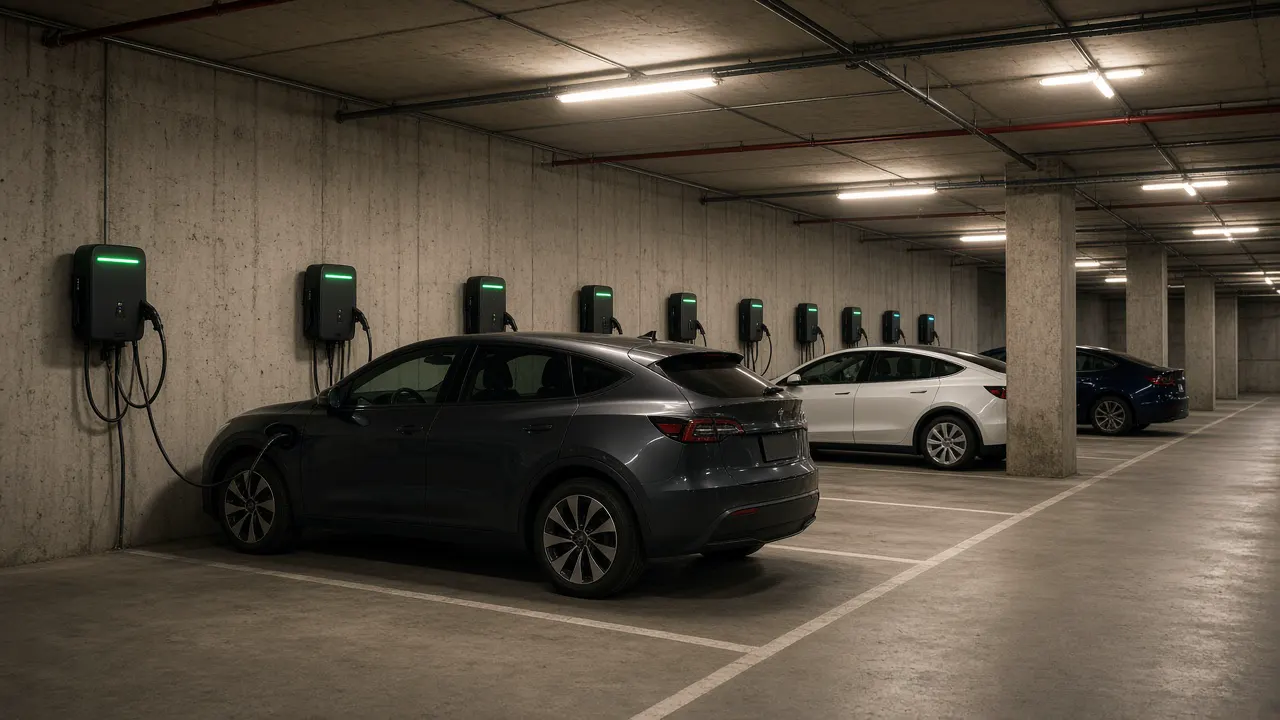
The U.S. Energy Information Administration's Electricity Monthly Update lists the August 2026 residential retail price at 18.16 cents per kilowatt-hour, 3.4 percent higher than August 2025. The page's release date is 23 October 2026, and the next release date it prints is 24 November 2026. EIA says it does not directly collect retail electricity rates. It calculates average retail revenue per kilowatt-hour from sales revenues and volumes, and it uses that average as a proxy for price.
The same table lists commercial revenue at 14.47 cents per kilowatt-hour in August 2026, up 4.3 percent from a year earlier, and the all-sector average at 14.87 cents, up 5.1 percent. A home bill follows the residential line. On state averages for that month, the update says California, Massachusetts, and Rhode Island had the highest average revenues in the contiguous United States, at 29.02, 26.42, and 25.34 cents per kilowatt-hour. It says North Dakota, Louisiana, and New Mexico had the lowest, at 8.91, 9.86, and 10.08 cents per kilowatt-hour. A household pays its own tariff. The 18.16 cent figure is a national proxy for August 2026.
FuelEconomy.gov's charging page answers a narrower question with a worked example, and the example does not use 18.16 cents. It says that if you drive an electric vehicle that gets 97 MPGe, which it also writes as 35 kilowatt-hours per 100 miles, 12,000 miles a year, electricity costs $0.13 per kilowatt-hour, and you only charge at home, charging would add $45.50 to the monthly electric bill. This desk recorded that page on 26 October 2026. It does not show a publication day. Those inputs are 4,200 kilowatt-hours a year. At $0.13 per kilowatt-hour, 4,200 kilowatt-hours is $546 a year, and $546 divided by 12 is $45.50, the monthly figure the page prints. The page does not call $0.13 the current U.S. average.
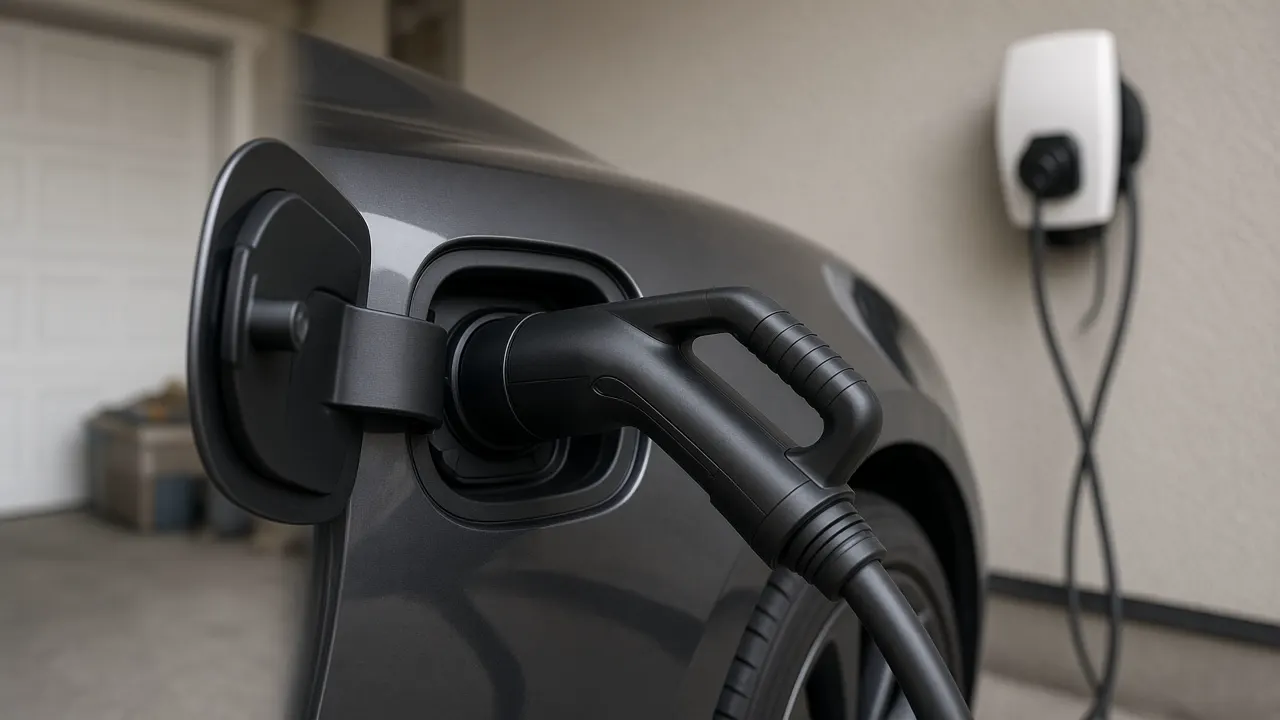
The Alternative Fuels Data Center home-charging page gives the arithmetic without a monthly bill. It says the cost per mile needs the electricity price and how many kilowatt-hours the vehicle uses to travel 100 miles. Its example: if electricity costs 10.7 cents per kilowatt-hour and the vehicle uses 27 kilowatt-hours to travel 100 miles, the cost per mile is about $0.03. A second example on the same page: at 10.7 cents per kilowatt-hour, charging an electric vehicle with a 200-mile range, assuming a fully depleted 54 kilowatt-hour battery, costs about $6 to reach a full charge. The page says the actual residential cost depends on the equipment, the time of day, and how long the station is used, and that some utilities offer residential time-of-use rates. This desk recorded the page on 26 October 2026. It does not show a publication day. The 10.7 cent price is the page's example.
Cold weather changes the kilowatt-hours per 100 miles those formulas use. AAA's 2026 laboratory test, covered in this desk's cold-weather range explainer, found a lower calculated range at 20°F than at 75°F for the three electric vehicles in that test. More energy per mile raises the electricity those examples multiply. The FuelEconomy.gov and data-center examples are not winter figures.
Where the car charges changes the price and the speed. The data center's charging-stations page says most electric-vehicle owners do the majority of their charging at home. It describes AC Level 1 as a 120-volt plug, about 5 miles of range per hour of charging, assuming 1.9 kilowatts, and says 8 hours at 120 volts can replenish about 40 miles for a mid-size electric vehicle. It describes AC Level 2 as 240 volts in a typical home, or 208 volts in a typical commercial building, about 25 miles of range per hour. It says most residential Level 2 chargers operate at up to 30 amps, delivering 7.2 kilowatts, and require a dedicated 40-amp circuit under National Electric Code Article 625. A footnote says a Level 2 unit can range from 2.9 to 19.2 kilowatts. FuelEconomy.gov's table also prints 5 miles of range per hour for Level 1 and 25 miles per hour for Level 2, and its note says the Level 2 value is an average that can range from a few miles per hour to around 40. It says fast charging, which it puts at 100 to 200 or more miles of range per 30 minutes, is usually along heavy traffic corridors and is not practical for home installation. This desk recorded both pages on 26 October 2026. The miles-per-hour lines are the agencies' typical rates.
The home-charging page says many owners can meet daily driving range requirements by charging overnight with the Level 1 cordset that comes with the vehicle, with no additional cost or installation, if an outlet on a dedicated branch circuit is available near where they park. It says Level 2 equipment can be installed for drivers with less regular schedules, longer commutes, or large batteries that need more than an overnight charge. Outdoor equipment has to be outdoor-rated. Charging at multifamily housing, it says, needs extra consideration and may be more like public charging than charging at a single-family home. This desk's story on the LAZ and EverCharge joint venture is about that kind of building. The announcement does not name an installation price.
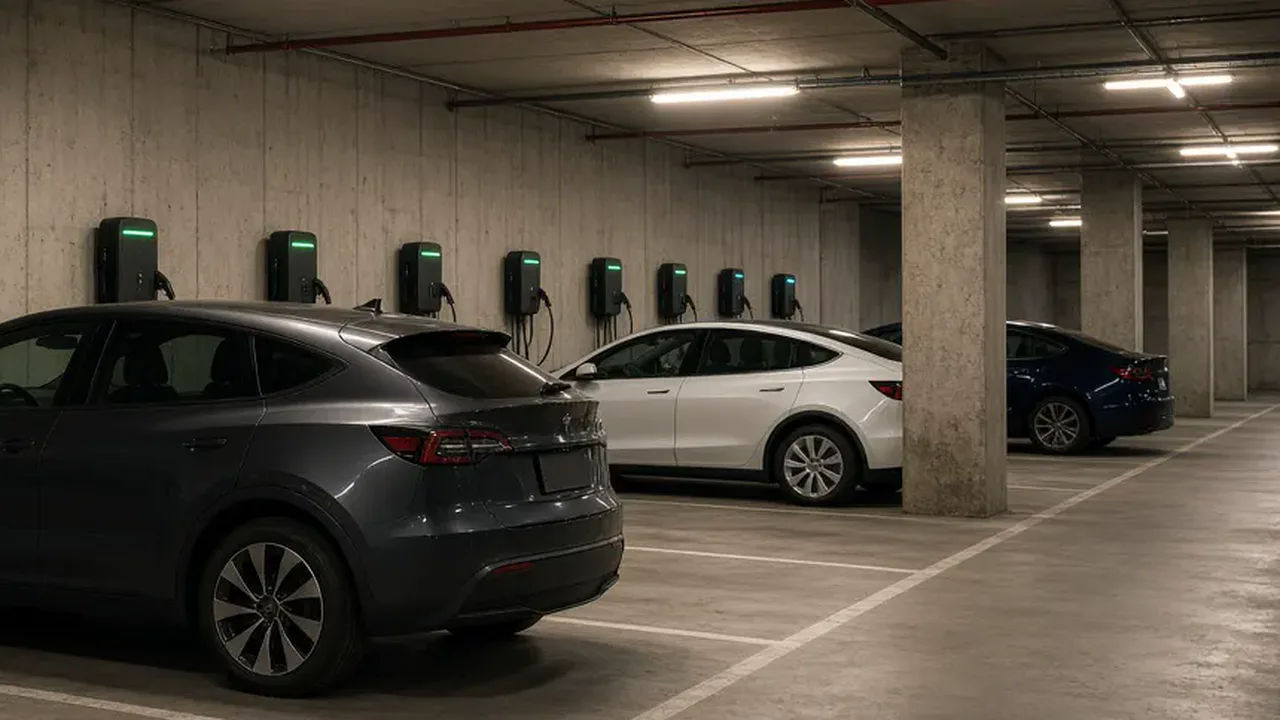
FuelEconomy.gov separates the charger from the electricity. It says home charger units generally cost between about $400 and $1,000. It says the installation cost depends on the electrician, the complexity, and any permits or other fees, and that incentives may offset some of the cost. It does not print a labor price. It says a plug-in hybrid with a small pack, or a driver who covers a limited number of miles on electricity each day, may be served by Level 1, and that a large pack and 50 or more electric miles a day may make a Level 2 charger worth the money. That is the page's guidance for a driver deciding on equipment. It is a range for the unit, and it leaves the installation quote to the house.
Public charging is a different price. FuelEconomy.gov says some public chargers are free and others use a flat fee, a monthly subscription, a charge for the electricity, or a charge for time, and that rates vary by region and network. It says there are over 81,000 public charging stations in the country. That station count is a different unit from a count of DC fast-charging ports. This desk's story on ChargePoint's U.S. DC fast ports uses another dataset. A posted price in another country is also separate from the U.S. residential average. Tesla's four open Singapore bays are priced per kilowatt-hour in Singapore cents, with a higher band for non-Tesla cars, on The Straits Times' account.
Analysis
Three official pages answer three different questions. EIA's 18.16 cents is the August 2026 U.S. residential average revenue per kilowatt-hour, released 23 October 2026, and EIA calls it a proxy. FuelEconomy.gov's $45.50 a month uses $0.13 per kilowatt-hour, 35 kilowatt-hours per 100 miles, and 12,000 miles a year, all at home. The data center's about $0.03 a mile and about $6 for a full charge use 10.7 cents and its 27 kilowatt-hour or 54 kilowatt-hour examples. The state averages that update names run from 8.91 cents in North Dakota to 29.02 cents in California, and it limits the high end to the contiguous United States. The $400 to $1,000 line is FuelEconomy.gov's range for a home charger unit. The electricity, the charger, and a public session are three bills.
More from the Charging desk: ChargePoint's U.S. DC fast ports, apartment charging from LAZ and EverCharge, and cold weather and electric-car range.