Cold weather and electric-car range
AAA's 2026 test found a 39.0 percent average drop in calculated EV range at 20°F versus 75°F. A 2019 test and an Energy Department record differ.
Last updated
This is not financial, tax, or investment advice. It is a report. Confirm the figures with the cited source and a qualified adviser.
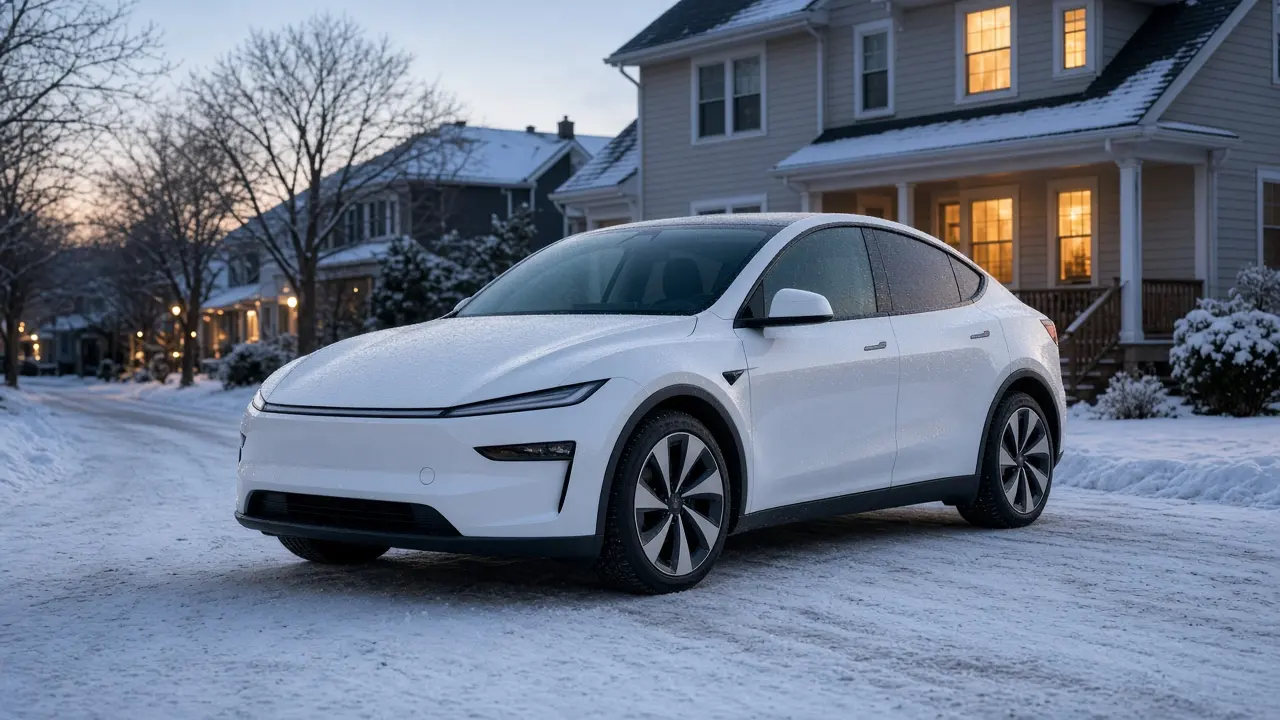
AAA's automotive engineering team said on 1 May 2026 that three electric vehicles, tested in a laboratory, lost 39.0 percent of calculated driving range on average at 20°F compared with 75°F, and 35.6 percent of MPGe. The newsroom account and the research report describe that test. The report cover says April 2026 and does not print a day. This desk recorded the PDF on 25 October 2026.
The cars ran on a chassis dynamometer at the Automobile Club of Southern California's Automotive Research Center. The newsroom calls that machine a treadmill for cars. Cabin temperature was set to 72°F. The test cell was held at 20°F, 75°F, or 95°F. The report says the runs followed a modified SAE J1634 procedure, changed so cabin air conditioning could be used at those temperatures. It says the results should not be compared with EPA fuel-economy or range labels, because the procedure is not the EPA certification test. The report's test-vehicle table lists a 2025 Chevrolet Equinox EV, front-wheel drive, LT; a 2025 Ford Mustang Mach-E, all-wheel drive, Premium Ext; and a 2025 Tesla Model Y, rear-wheel drive, Long Range. The same report also tested a Toyota Prius, a Honda CR-V Hybrid, and a Hyundai Tucson Hybrid. Its key findings put the hybrids' fuel-economy loss at 20°F at 22.8 percent versus 75°F.
The electric-vehicle average hides a wide spread. These combined figures are the report's, each cold result against that vehicle's own 75°F result. The Model Y went from 113.7 MPGe and a calculated 297.7 miles at 75°F to 61.7 MPGe, down 45.7 percent, and 157.7 miles, down 47.0 percent, at 20°F. The Equinox EV went from 109.1 MPGe and 320.8 miles to 64.7 MPGe, down 40.6 percent, and 177.2 miles, down 44.8 percent. The Mach-E went from 96.0 MPGe and 287.3 miles to 76.2 MPGe, down 20.6 percent, and 214.6 miles, down 25.3 percent. Those miles are calculated range in this test. They are not EPA ratings.
The report says the Mach-E's cold penalty was smaller in percent terms than the other two electric vehicles in the set. In that paragraph it says Ford, for the 2025 Mach-E, implemented a patented vapor-injection heat-pump architecture and revised thermal control algorithms, designed to limit losses from cabin and battery heating at temperature extremes. The desk's story on the 2027 Mustang Mach-E Trail is a later model year and a different report. It is not this test car.
At 95°F the report's electric-vehicle averages were a 10.4 percent drop in MPGe and an 8.5 percent drop in range, versus 75°F. The same vehicle lines show that average is also a spread. The Model Y fell to 88.3 MPGe, down 22.3 percent, and 233.9 miles, down 21.4 percent. The Equinox EV fell to 105.5 MPGe, down 3.3 percent, and 317.2 miles, down 1.1 percent. The report says that was the smallest hot-weather degradation in the electric group. The Mach-E fell to 90.6 MPGe, down 5.6 percent, and 278.7 miles, down 3.0 percent. On cost, the key findings say cold operation raised electric-vehicle operating cost by $32.11 per 1,000 miles at residential electricity rates and by $76.93 per 1,000 miles at commercial charging rates. The newsroom says those figures use AAA's fuel and electricity prices as of 27 March 2026. They are AAA's estimates for this test. They are not a household's bill, and they are not a recommendation.
Greg Brannon, AAA's director of automotive engineering and research, said on the newsroom page: "EVs are efficient in moderate temperatures but lose significant range in the cold." He added: "We expected this from our previous research, but were surprised by the 23% reduction in fuel economy for the hybrids in cold temperatures." The report's key findings print 22.8 percent for that hybrid loss. The quote prints 23 percent. Both sentences are AAA's.
The 2026 averages are not the 2019 test. AAA's 2019 range report says the organization tested five battery-electric vehicles. The PDF cover says February 2019 and does not print a day. AAA's newsroom page for that file is dated 7 February 2019. This desk recorded the PDF on 25 October 2026. The 2019 key findings separate the outside temperature from the use of the cabin heater. Versus testing at 75°F, 20°F on its own cut combined range by 12 percent and combined MPGe by 8 percent. With the HVAC system in use, 20°F cut combined range by 41 percent and combined MPGe by 39 percent. At 95°F with HVAC in use, both fell by 17 percent. The 2026 report's abstract repeats those 2019 HVAC results: 41 percent of range and 39 percent of MPGe at 20°F, and 17 percent of both at 95°F.
FuelEconomy.gov tells drivers that electric-vehicle fuel economy can drop roughly 39 percent in mixed city and highway driving, and range by 41 percent, and that about two-thirds of the extra energy is used to heat the cabin. It says that when the cabin heater is not used, fuel economy is 8 percent lower at 20°F than at 75°F and range is about 12 percent lower. The page says its electric-vehicle estimates are based on a 2019 AAA study. It does not show a publication day. This desk recorded it on 25 October 2026. The 39 and 41 percent lines match the 2019 HVAC result. The 8 and 12 percent lines match the 2019 result with the heater off. The page is a consumer summary of that study. It is not the 2026 three-car test.
A Department of Energy program record, dated 12 September 2024 and approved on 23 September 2024, reports a different laboratory set. Argonne National Laboratory dyno-tested three model-year 2019 to 2020 electric vehicles on EPA drive cycles, with the cabin held at 72°F. Against a 72°F ambient reference, the record says range fell 41 percent at 20°F and by an average of 14 percent at 95°F. At 0°F, it says the added HVAC load produced an average range loss of approximately 50 percent, with a maximum of 59 percent in urban driving that included idle time and a minimum of 39 percent in highway driving with no idle. It calls HVAC power the primary reason for the range gaps, and battery chemistry in the cold a secondary reason. It says heat-pump systems typically use notably less power than electric resistance heat alone, and that in one comparison a heat pump cut HVAC power draw by 38 percent at 20°F. That 41 percent is Argonne's figure for those three older vehicles against a 72°F reference. AAA's 2019 figure of 41 percent is a different test, against 75°F, with the heater on. The same integer is not the same measurement.
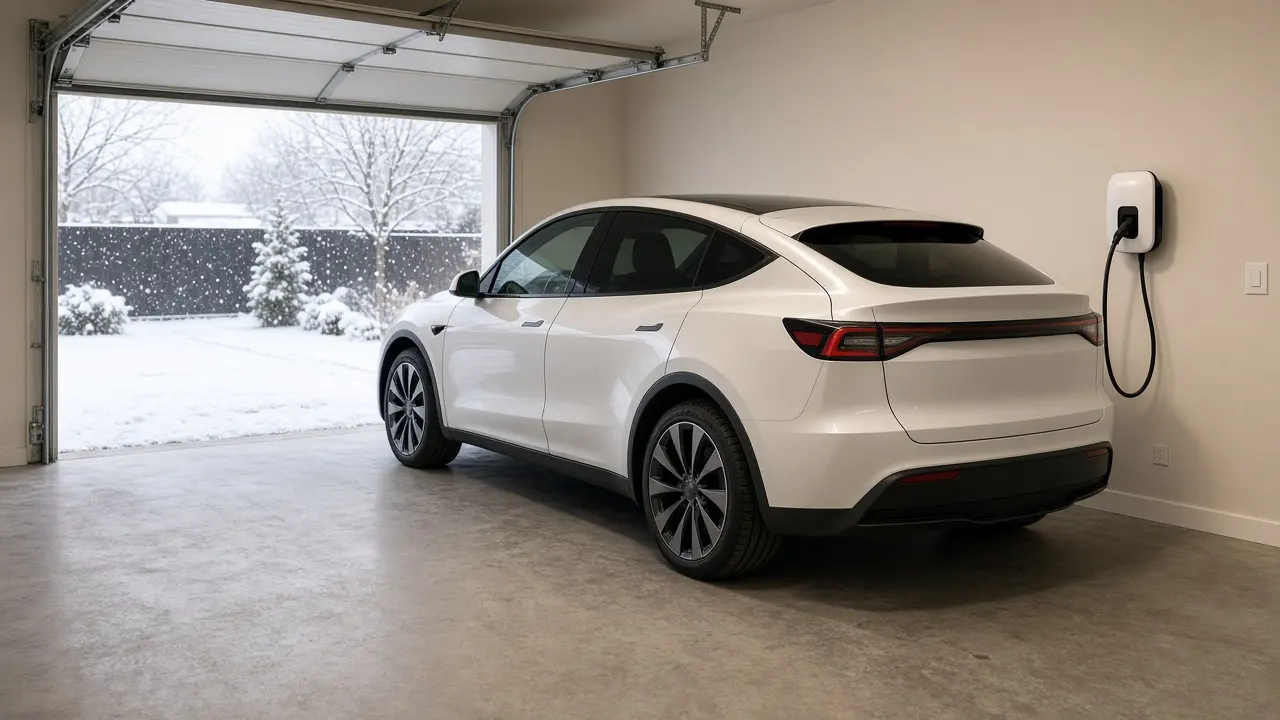
FuelEconomy.gov says preheating the cabin of a plug-in hybrid or electric vehicle while it is plugged in can extend range, and that seat warmers instead of the cabin heater can save energy and extend range. That is the page's guidance for drivers. It is not a measured result for the cars named above. Public and home charging stories are on the Charging desk.
Analysis
The 39.0 percent range figure and the 35.6 percent MPGe figure are averages for three 2025 electric vehicles in AAA's 2026 laboratory test, cabin set to 72°F, versus 75°F. The same report's own lines are 47.0 percent of calculated range for the Model Y it tested, 44.8 percent for the Equinox EV, and 25.3 percent for the Mach-E. The 2019 test's 41 percent is the heater-on result for five earlier vehicles. Its heater-off result at 20°F was 12 percent of range. FuelEconomy.gov points its electric-vehicle cold-weather estimates at that 2019 study. The Department of Energy record's 41 percent is Argonne's result for three 2019 to 2020 vehicles against 72°F, with the cabin at 72°F. AAA's 2026 report says its figures should not be set beside EPA labels. A laboratory average is not a forecast for one car, one trip, or one electric bill.
More from the Cars desk: the 2027 Mustang Mach-E Trail, ID. Cross prices in France, and Firefly's 60 kWh pack.
Tags
Sources
- AAA Study Reveals Temperature Impacts on EV and Hybrid Efficiencies and Costs (external source)
- Temperature Effects on Electric and Hybrid Vehicle Efficiency (external source)
- AAA Electric Vehicle Range Testing (external source)
- 2019 Electric Vehicle Range Full Research Report – Feb 2019 (external source)
- Fuel Economy in Cold Weather (external source)
- Impact of Cold Ambient Temperature and Extreme Conditions on Electric Vehicles (external source)