Chery says its Volt-Dragon charger peaks at 1.44 MW, with a 10 to 97 percent charge in 6 minutes 50 seconds
Chery has announced a passenger-car charger it calls Volt-Dragon, with a stated peak of 1.44 MW and a 10 to 97 percent charge in 6 minutes 50 seconds. It has not named the car, and the first step it describes is about 100 sites in 10 Chinese cities.
Last updated
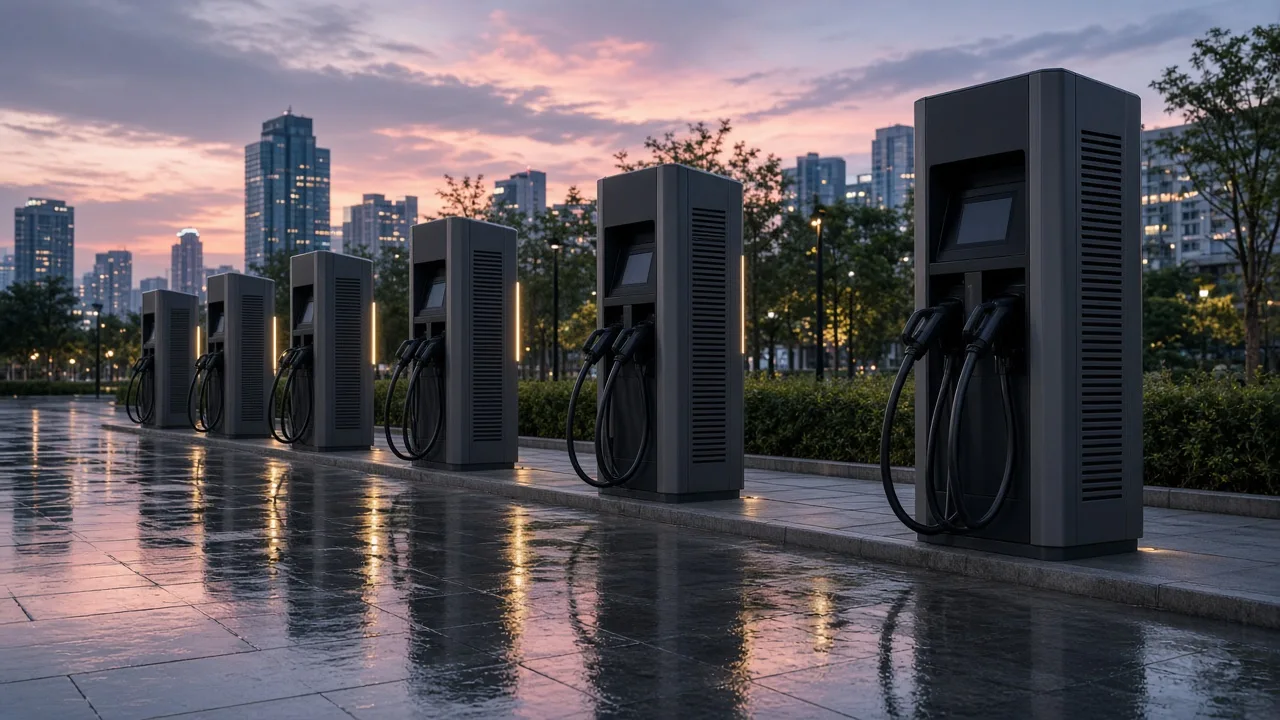
Chery has put a passenger-car charger on the table at a stated peak of 1.44 MW, under the name Volt-Dragon. CarNewsChina, Electrek, and electrive all report the same two company figures: a peak of 1.44 MW, and a charge from 10 percent to 97 percent in 6 minutes and 50 seconds. None of the three names the car that session was run on.
CarNewsChina reported that Chery announced Volt-Dragon at its Global Innovation Conference, beside a large language model it calls CheryMind. Chery says that model will be used for robotaxis, L4 assisted-driving systems, and Volt-Dragon. The same report says Chery has not disclosed how CheryMind works with the chargers. electrive, writing from that account, says it remains unclear how the link would work in practice.
The five-minute range claim is a separate sentence from the 6-minute-50-second session. CarNewsChina says Chery promises that users can gain 500 km of driving range in 5 minutes, and that Chery has not said which vehicle or model that applies to. Electrek reported the same 500 km figure and printed it as 311 miles. Both CarNewsChina and Electrek say Chery also described a more conservative case, 500 km in 8 minutes. CarNewsChina wrote that supported vehicles are expected to be built on 800-volt or 1000-volt-plus platforms. electrive says no compatible model in Chery's lineup has been detailed.
The outlets do not agree on the rival times they place next to Chery's. CarNewsChina published a table it says it compiled. Under a heading for a 10 percent to 97 or 98 percent charge, that table lists 6 minutes 50 seconds for Volt-Dragon, 6 minutes 27 seconds for CATL's third-generation Shenxing, 9 minutes for BYD's Blade Battery 2.0, 8 minutes 42 seconds for Geely's Energee Golden Brick, and 8 minutes 3 seconds for Hongqi. In the article text, the CATL figure is a 10 to 98 percent charge, while Chery's is 10 to 97 percent. Those are not the same window. electrive instead wrote that BYD states a 10 to 98 percent Flash Charging session of 6 minutes and 27 seconds, and that Huawei and Geely specify 8 to 9 minutes. Because those accounts give the 6-minute-27-second mark to different companies, this story does not treat the ranking as settled. Chery's own 6 minutes 50 seconds, and the 1.44 MW peak, are the figures all three outlets attribute to Chery.
CarNewsChina attributes several further hardware claims to Chery: silicon-carbide power electronics, grid-to-plug efficiency of 96.5 percent, immersion liquid cooling, a plug and cable weighing 2 kg, and a promise that stations will not exceed 50 dBA. Chery also says the system will support a robotic arm for automated charging and vehicle-to-grid export. electrive reports those last two as future features, not as equipment already in service.
The station numbers are a plan. CarNewsChina says Chery is opening 100 Volt-Dragon stations in 10 cities in China, with further plans to be announced before the end of 2026, and that the longer target is more than 20,000 V2G-capable Volt-Dragon stations worldwide by 2029. Electrek described the near-term step as 100 chargers in 10 Chinese cities, and the later one as 20,000 stations worldwide by 2029. "Stations" and "chargers" are not the same unit, so this story does not collapse them into one count. electrive's wording, "100 MW stations," is ambiguous and is not used here. For a comparison, CarNewsChina wrote that BYD reached 10,000 Flash Charging stations in late August 2026 and aims for 20,000 before the end of 2026.
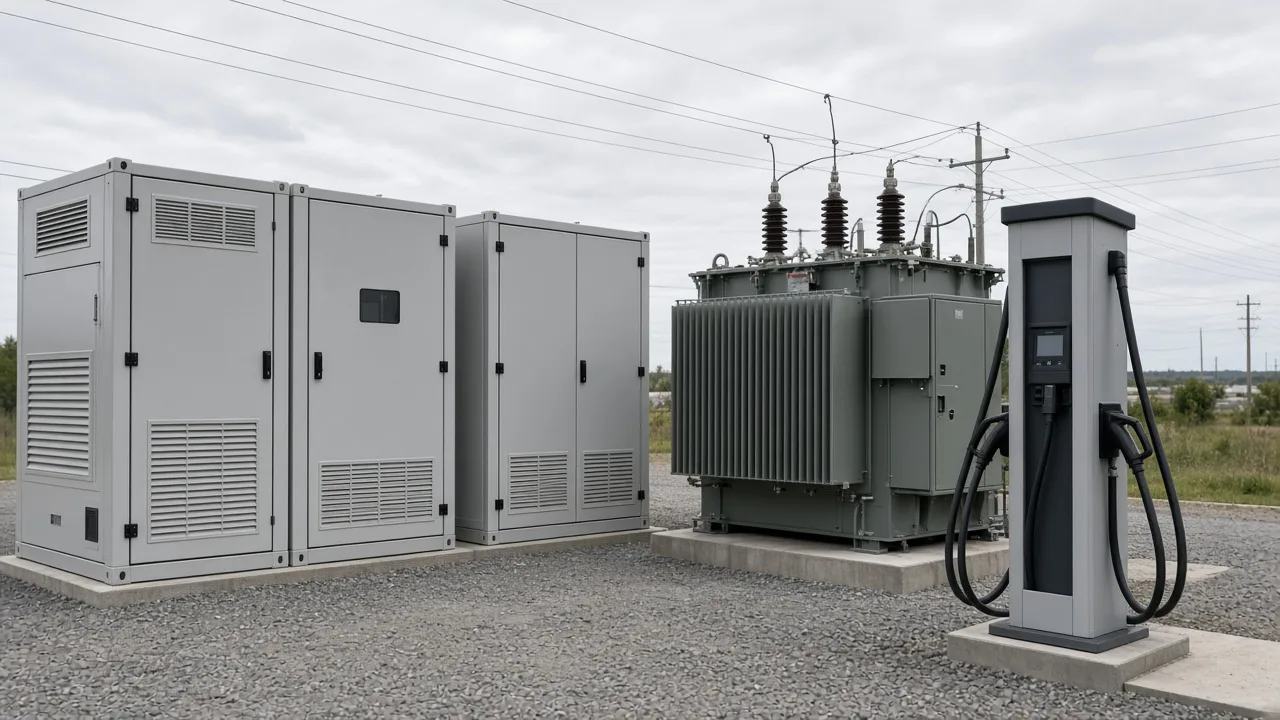
The same week, BYD's fast-charging name turned up in a Malaysian agreement that is still a study, not a switched-on network. Paul Tan's Automotive News reported that Gentari, which it describes as wholly owned by Petronas, and BYD Malaysia signed a memorandum of understanding in Shenzhen on 21 October 2026. It names the signatories as BYD Malaysia managing director Jacob Ma and Gentari chief executive Sushil Purohit. Paul Tan wrote that the collaboration will explore chargers of up to 1,500 kW, which it says can take a compatible BYD or Denza from 10 to 70 percent in five minutes and to 97 percent in nine minutes, along with the battery storage those sites would need. "Speed is one part of that equation," Purohit said, in that account.
EV Infrastructure News reported the memorandum as a joint exploration and said Flash Charging can deliver about 400 km in as little as five minutes for compatible vehicles under optimal conditions. It also reported 53,537 electric-vehicle registrations in Malaysia in the first nine months of 2026, up 98.8 percent from a year earlier, a government aim of 30,000 public charging points by 2030, more than 600 Gentari points in Malaysia, and about 18,000 Gentari roaming points in the region. Those registration and network figures are as that article states them. This desk has not opened a separate Malaysian government table for the 53,537.
Analysis
The 1.44 MW peak, the 6 minutes 50 seconds, and the 500 km claim are Chery's figures, as three outlets reported them. No report cited here names the test car, the pack size, or an outside lab. The 100-site step and the 20,000-station mark are targets. The Gentari document is an agreement to look at Malaysian sites, not a count of Flash Charging stalls already open there.
Tags
Sources
- Chery challenges BYD, Geely, Huawei with 1.44MW charger, promises 500km in 5 minutes (external source)
- Another megawatt-level charger enters China: 300 miles in 5 minutes (external source)
- Chery launches megawatt charging system for passenger EVs (external source)
- BYD Malaysia, Gentari sign MoU for 1,500 kW Flash Charging deployment – highway R&Rs explored (external source)
- BYD Flash Charging to come to Malaysia after MoU signed with Gentari (external source)