California's charger reliability rules are now in force: 97% uptime and a common protocol
California's Energy Commission now requires publicly funded fast chargers installed since 2024 to report reliability and meet a 97 percent uptime standard, and networked fast chargers installed from 28 September 2026 to use the OCPP 2.0.1 protocol. Canary Media reports that some in the industry call it a data-reporting burden, while others say it protects drivers when a network shuts down.
Last updated
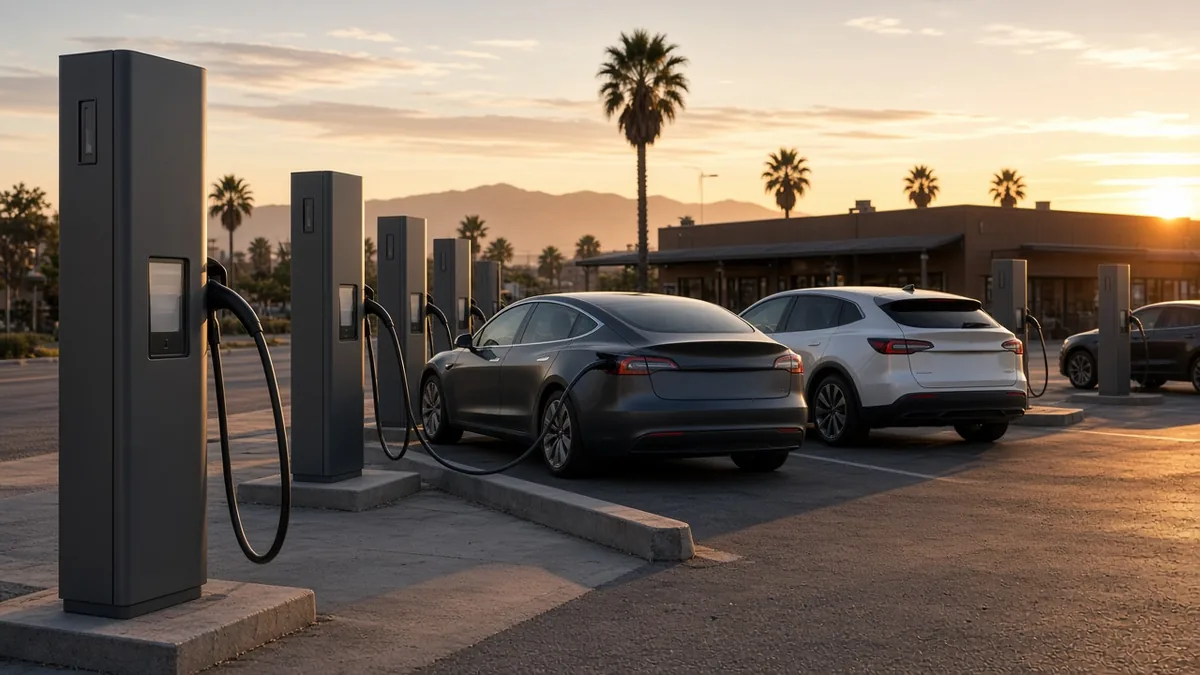
California now requires publicly funded fast chargers to keep working at least 97 percent of the time, and to report how they are doing. Under the EV Charger Data and Reliability Standards adopted by the California Energy Commission (CEC), the uptime standard applies to direct-current fast chargers that received public funding, were installed on or after 1 January 2024, and do not serve fleets only. Networked fast chargers installed on or after 28 September 2026 must report using version 2.0.1 of the Open Charge Point Protocol (OCPP) and send hourly data.
Canary Media reported on the rules on 29 October. Jeff St. John writes that laws passed in 2022 and 2023 told the CEC to set reliability and data-sharing standards for charger installers that take money from state agencies or regulated utilities, and that "it's taken years, but those rules are finally in place."
What the rules require
The CEC's summary page splits the regulation into several parts. In plain terms:
- Inventory reporting. Almost all charging stations must report their number, location, and specification to the CEC. Private home chargers are among the exceptions, and the standards exclude single-family homes and buildings with fewer than four homes.
- Uptime. Publicly funded fast chargers installed since 1 January 2024 must report reliability to the CEC and meet a 97 percent uptime standard, with certain exclusions.
- Data sharing. Publicly funded Level 2 and fast chargers installed since 1 January 2024 that are open to the public must share availability, accessibility, and real-time pricing with third-party software developers through an API.
- Network providers. Charging network providers that report for these new fast chargers have to hold an OCPP certification for their management system and show they can send the hourly data.
On enforcement, the CEC says it will apply the reliability and inventory requirements through its grant agreements where they apply, that it may publish reports ranking networks by reliability, and that state agencies may consider reliability data when deciding on funding. Networks can dispute published figures through a formal process. The page also says CEC staff have proposed revisions that would make minor administrative changes and partly exempt chargers fitted with the Megawatt Charging System, the connector for heavy trucks.
Money comes with conditions
Canary Media reports that applicants for the $55 million in incentives from the California Electric Vehicle Infrastructure Project, known as CALeVIP, must now use approved equipment and software providers and produce hourly performance data.
Not everyone likes it. St. John quotes an unnamed person at a large charging network who calls the rules "largely an onerous data-reporting exercise" that will not "move the needle on reliability." Obrie Hostetter of the Center for Sustainable Energy, the nonprofit that manages CALeVIP, told Canary Media she understands those concerns, but that projects using public money need to serve the public reliably and that performance data is how to check.
Why a common protocol matters
OCPP is an open standard that lets chargers and network software from different companies talk to each other. Hostetter told Canary Media the point of requiring it is to reduce the risk of chargers, and drivers, being stranded if a manufacturer or network goes out of business.
Canary Media points to a real case: in 2024, Enel X Way closed its North American charging business and left about 25,000 JuiceBox commercial chargers running nonstandard software. Michael Bakunin, chief executive of the charging software company Epic Charging, said his company helped some owners move those chargers to its software, and that it was not easy. He also said the CEC's OCPP rules have "very strict requirements," but that they should let the next generation of chargers switch software providers if they need to.
Data gaps remain
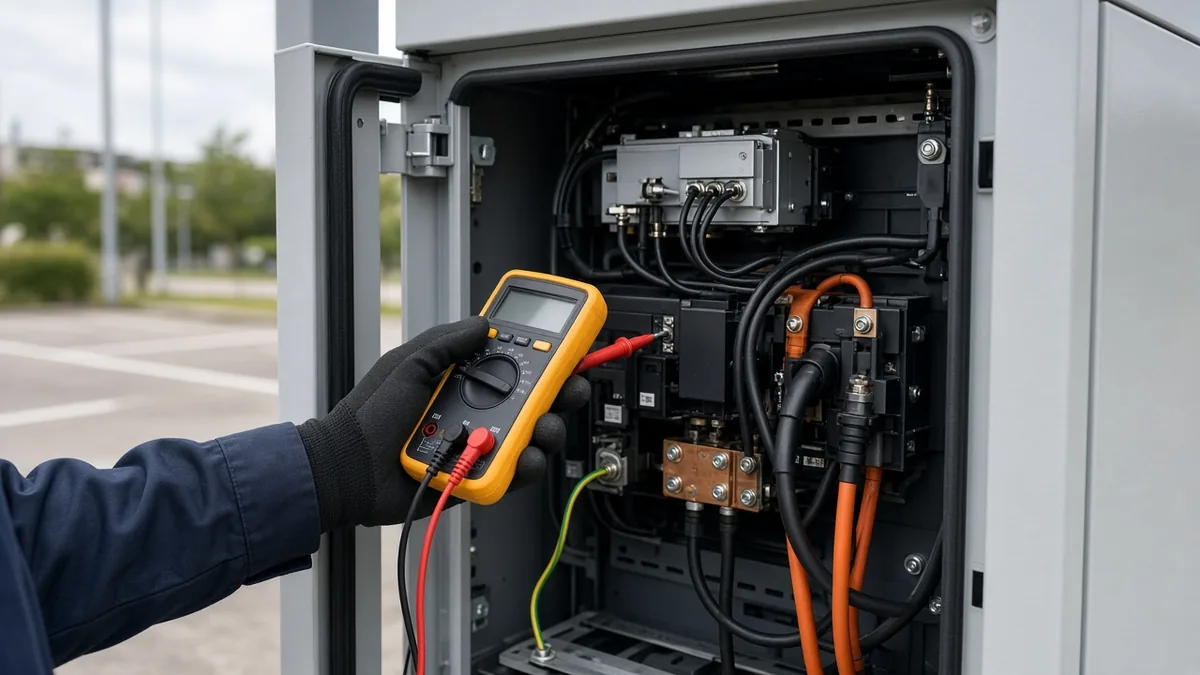
Kameale Terry, chief executive of ChargerHelp, which repairs chargers, told Canary Media that missing or incomplete data is still a major problem. She said repair crews do not get all the information they need to diagnose a broken charger, and that there are no clear rules on how hardware and software companies manage the "handoffs" between diagnostics, car-to-charger communication, and payment that can make a session fail.
Terry pointed to a $4 million CEC grant for the Capital Charge Yard, a testing lab in Sacramento that opened in August. Canary Media says companies taking part include ABB, ChargePoint, EVgo, Hubject, Rivian, and Tesla. Orville Thomas, chief executive of the nonprofit that runs it, the California Energy, Power, and Innovation Collaborative, said the goal is to "make sure that chargers work as they're expected, the first time that you plug them in."
Ride-hail incentive
Canary Media also reports that the California Public Utilities Commission's Rideshare Incentives for Driving Electric program will offer up to $20,300 toward buying or leasing a new zero-emission vehicle, from next month, to "income-qualified, high-volume drivers" working with Uber, Lyft, or HopSkipDrive. Eligibility is set by the program, and this desk has not checked individual terms.
Analysis
The rules cover chargers that took public money, not every charger in the state, and the 97 percent figure is a standard for reporting, not a promise that a given station will work. What changes for drivers is mostly behind the screen: better data, open software that can outlive a failed network, and a regulator able to publish who performs worst. St. John's own view in Canary Media is that the state needs both rules and test spaces like the Charge Yard. That is his opinion.
This desk has covered the wider U.S. picture in ChargePoint's count of U.S. fast-charging ports. What public and home charging cost, and how fast each charging level is, are in what it costs to charge an electric car at home. Site batteries at fast-charging hubs come up in Ionity's Wertheim story.
More from the Charging desk.