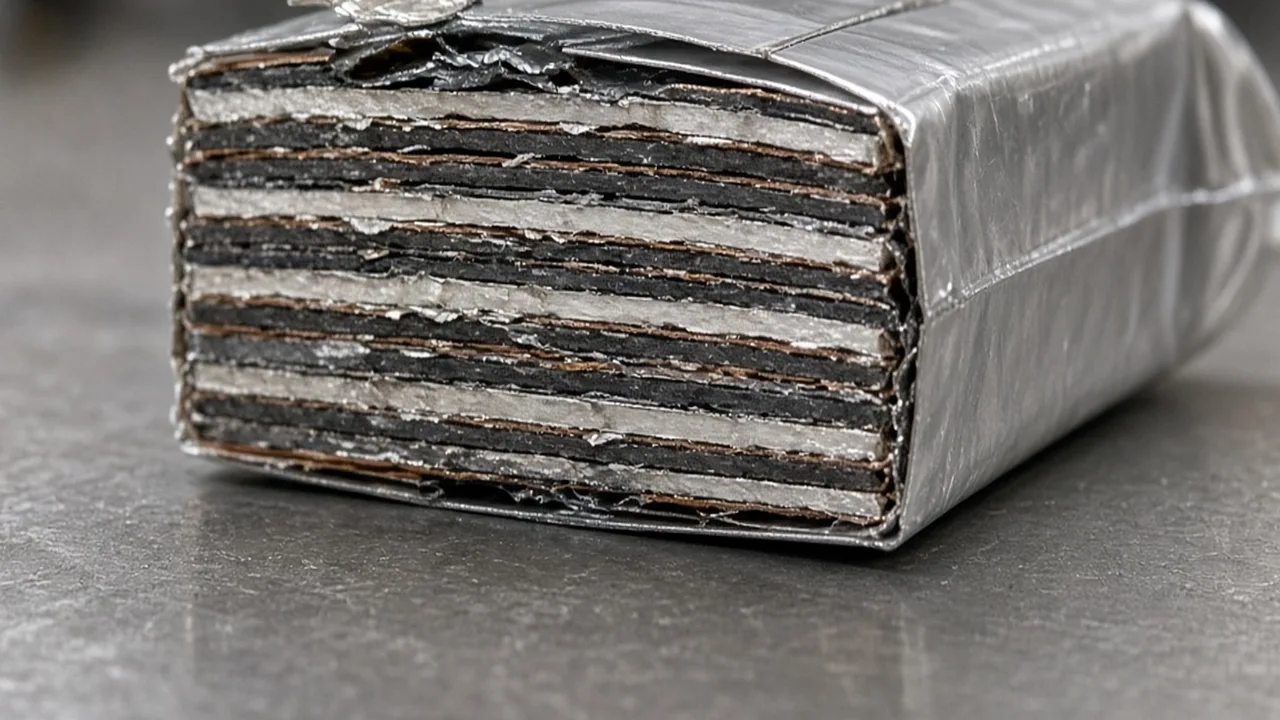
QuantumScape unveils Osprey, an all-solid-state cell platform with a sulfide cathode
QuantumScape says early Osprey cells reached 1,000 full cycles at about 80% capacity under one atmosphere of pressure, though the test cells are small lab samples.
Last updated
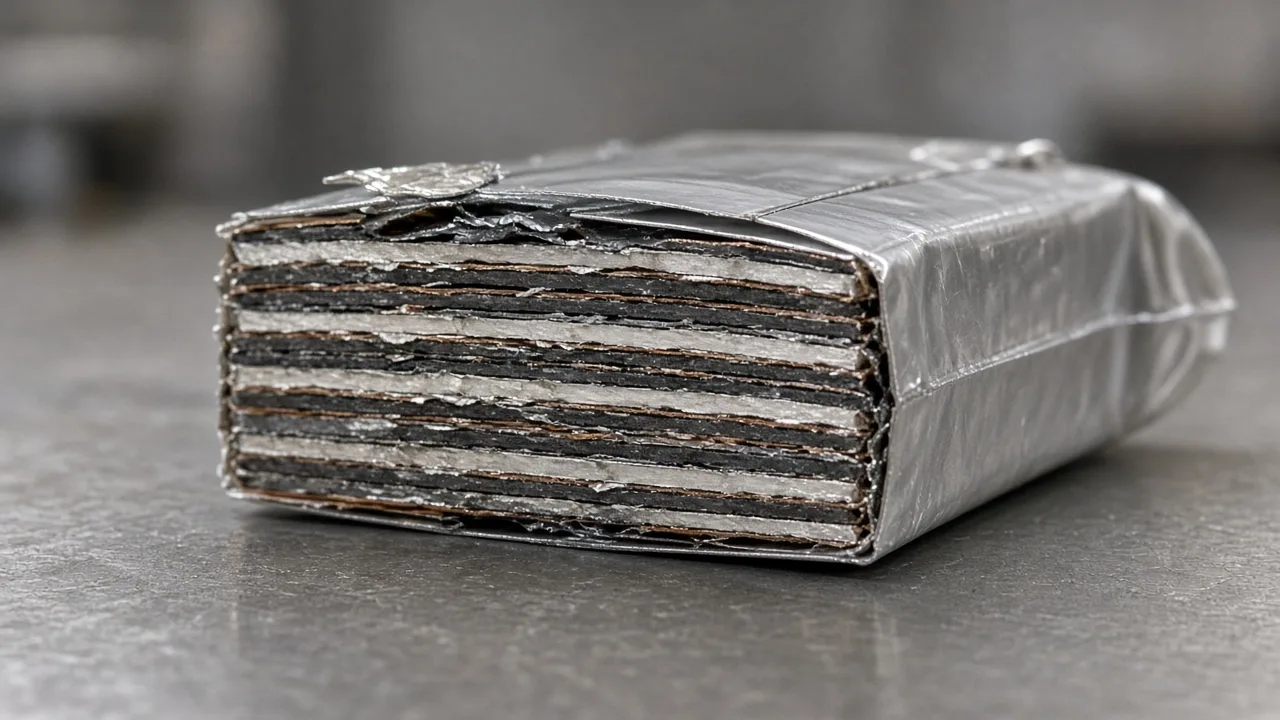
QuantumScape announced Osprey on 11 November, a new platform for all-solid-state batteries that pairs its ceramic separator and anode-free lithium-metal design with a solid sulfide-based cathode. In its press release, the company said Osprey cells produced the first public data showing a sulfide-based cathode cycling 1,000 times at just one atmosphere of pressure.
What QuantumScape is claiming
The company listed four early results: 1,000 full cycles with about 80% capacity retention, charging from 10% to 80% in five minutes, operation at one atmosphere of pressure, and operation below minus 20°C. It also projects energy density of up to about 1,100 Wh/L. QuantumScape said it has tested Osprey with solid cathodes developed in house and by its automotive customers, and that the platform opens new licensing and co-development options.
The test conditions matter
Electrek went through the accompanying white paper and found that several headline numbers come with conditions:
- Cycle life: the 1,000-cycle result came from a two-layer cell with a cathode the same area as the company's QSE-5 cell, cycled at 1C charge and discharge from 0 to 100% at 30°C and 1 atm. Electrek called this the strongest result, but estimated the cell holds roughly 0.3 to 0.4 Ah, against about 5 Ah for a QSE-5.
- Fast charging: the five-minute charge was run at 80°C in a two-layer cell. No room-temperature fast-charge result was published.
- Cold weather: the low-temperature figure came from a small single-layer cell discharged slowly; it kept 68% of its room-temperature capacity at minus 20°C.
- Energy density: the 1,100 Wh/L figure is a projection, backed by a coin-size cell tested at 3 atm for 100 cycles.
Why low pressure is the point
Sulfide solid-state cells usually need heavy external clamping to keep their layers in contact, which adds weight and cost to a pack. QuantumScape's approach keeps the sulfide in the cathode and uses its ceramic separator against the lithium metal. Electrek noted that Osprey has no production timeline: the white paper describes the process as demonstrated at laboratory scale, with significant process engineering work still to come. QuantumScape is separately still scaling its current QSE-5 cell, which uses a liquid catholyte, and Electrek said its planned 100 MWh line targets production in 2028.