Electric Truck Classes Explained: Class 1 to Class 8
US trucks are grouped into eight weight classes by gross vehicle weight rating (GVWR). What each class covers, where electric pickups, vans and semis fit, and why battery weight makes the classes matter.
Last updated
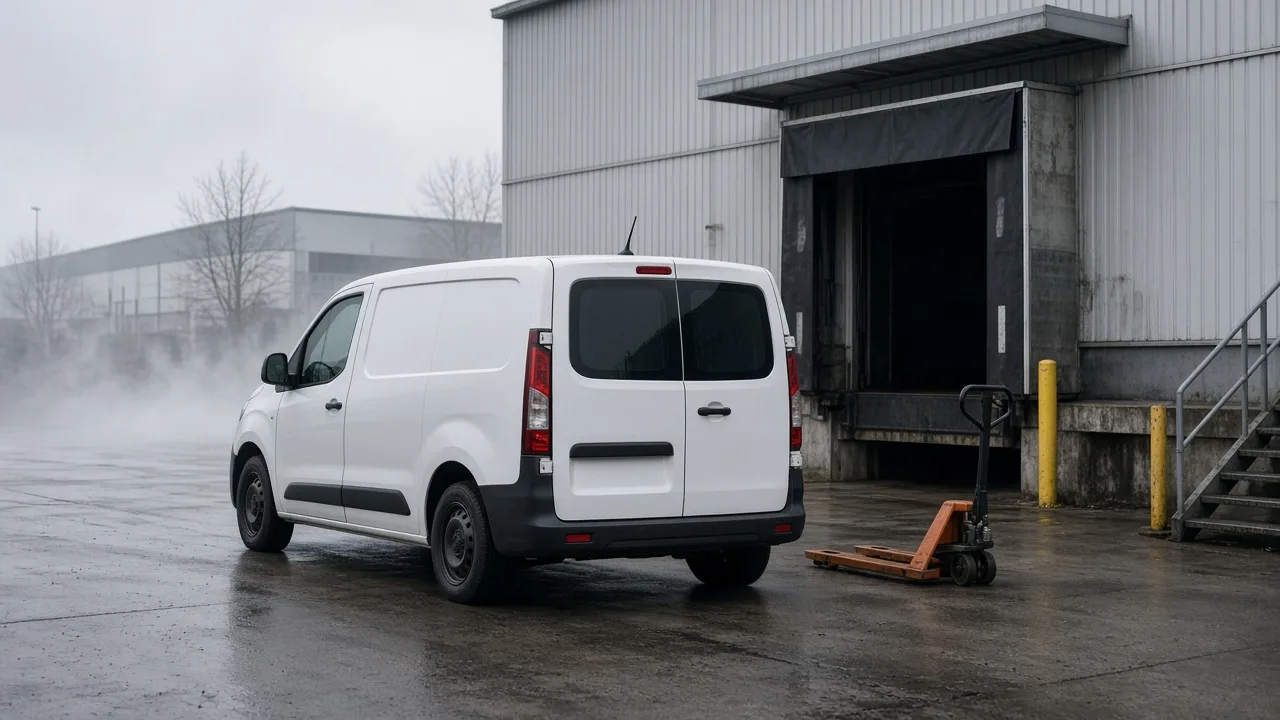
News about electric trucks can be confusing, because "truck" covers everything from a family pickup to an 18-wheeler. In the US, the industry and regulators sort vehicles into eight weight classes. Knowing the classes makes it far easier to follow announcements about electric vans, box trucks and semis, and to see why battery weight is such a big issue for the heavier ones.
Classes are based on GVWR
The classes are defined by gross vehicle weight rating (GVWR). That is the maximum the manufacturer says the fully loaded vehicle may weigh, including the vehicle itself, passengers, fuel or batteries, and cargo. It is not what the truck weighs empty.
The US Department of Energy's Alternative Fuels Data Center (AFDC) publishes the standard Federal Highway Administration classes:
| Class | GVWR (lbs) | Category | Typical examples |
|---|---|---|---|
| 1 | up to 6,000 | Light duty | Small pickups, many SUVs and minivans |
| 2 | 6,001–10,000 | Light duty | Full-size pickups, large vans |
| 3 | 10,001–14,000 | Medium duty | Heavy-duty pickups, walk-in vans |
| 4 | 14,001–16,000 | Medium duty | Larger walk-in and box trucks |
| 5 | 16,001–19,500 | Medium duty | Bucket trucks, larger box trucks |
| 6 | 19,501–26,000 | Medium duty | School buses, beverage trucks |
| 7 | 26,001–33,000 | Heavy duty | City transit buses, refuse trucks |
| 8 | over 33,000 | Heavy duty | Tractor-trailers (semis), cement mixers |
Example vehicles are illustrative. Any specific model's class depends on its rated GVWR.
Class 2a and 2b: the split that matters for EVs
Class 2 is often divided at 8,500 pounds. The AFDC chart shows the Environmental Protection Agency treating vehicles up to 8,500 lbs as light duty, with Class 2b (8,501 to 10,000 lbs) counted as heavy duty for emissions purposes.
This matters for electric pickups and large SUVs. Batteries are heavy, so an electric version of a vehicle often has a higher GVWR than its petrol equivalent, which can push it over 8,500 lbs. According to FuelEconomy.gov, vehicles over that line can fall outside the EPA's fuel-economy labelling. That includes pickups with GVWR over 8,500 lbs and a bed of 72 inches or more, cargo vans over 8,500 lbs, and passenger vehicles of 10,000 lbs or more. That is one reason some heavy electric pickups and vans come without a standard EPA label.
Light, medium and heavy duty
The classes are often grouped into three bands, though agencies draw the lines slightly differently:
- Light duty (Classes 1–2): passenger cars, pickups and vans. This is where most electric vehicles are sold today.
- Medium duty (Classes 3–6): delivery vans, box trucks, utility trucks and school buses. These vehicles typically run predictable daily routes and return to a depot each night. That makes them strong candidates for electrification, because they can charge overnight at the base.
- Heavy duty (Classes 7–8): transit buses, refuse trucks and long-haul tractor-trailers. Electric transit buses are already common in many cities. Long-haul Class 8 trucking is the hardest to electrify, because it combines very high energy use with long distances and tight schedules.
Why battery weight matters more as trucks get bigger
A truck's GVWR is a fixed ceiling, so every pound of battery is a pound that cannot be cargo. For a light-duty pickup that mostly means a higher GVWR and possibly a different regulatory category. For a heavy truck that already runs close to legal weight limits, a large battery pack can directly reduce the payload a fleet can carry and earn money on. Fleets weigh that against the lower energy and maintenance costs of electric drive.
Route type also shapes the picture:
- Return-to-base routes (parcel delivery, refuse collection, school buses) can use moderate batteries and depot charging.
- Regional haul may need high-power charging at the depot or along the route.
- Long haul needs the largest batteries and very high-power public charging along freight corridors.
Classes and driving licences
Weight classes also line up with licensing. Under federal rules (49 CFR 383.91), a commercial driver's licence (CDL) is needed for:
- Group B: any single vehicle with a GVWR of 26,001 pounds or more, which covers Classes 7 and 8 straight trucks.
- Group A: any combination with a gross combination weight rating of 26,001 pounds or more, where the towed unit exceeds 10,000 pounds. A typical tractor-trailer falls in this group.
- Group C: smaller vehicles that carry 16 or more people or hazardous materials requiring placards.
Most Class 3 to 6 vehicles can therefore be driven without a CDL unless they carry hazardous materials or many passengers. That is part of why medium-duty electric vans and box trucks have been an attractive early market. If extra battery weight pushes a vehicle over 26,000 lbs GVWR, it can move into CDL territory.
Reading electric truck announcements
When a manufacturer announces an electric truck, look for:
- GVWR or class. It tells you what job the truck is built for.
- Payload, the GVWR minus the vehicle's own weight. Compare it with the diesel equivalent.
- Battery capacity (kWh) and rated range, under realistic loads.
- Charging power, both AC at the depot and DC fast charging, and whether it supports high-power standards.
- Duty cycle. Is it designed for urban stop-start routes, regional runs or long haul?
The short version
US trucks are grouped into Classes 1 to 8 by gross vehicle weight rating, from under 6,000 lbs to over 33,000 lbs. Light-duty Classes 1 and 2 include most electric pickups and vans. Medium-duty Classes 3 to 6 are prime territory for depot-charged electric fleets. Heavy-duty Classes 7 and 8 include buses and semis, where battery weight, payload and charging power are the main challenges.