What vehicle-to-grid and bidirectional charging are
The U.S. Department of Energy describes a bidirectional EV as one that can charge from electric vehicle supply equipment and also discharge to an external load when paired with capable equipment. The same page distinguishes vehicle-to-building and vehicle-to-grid uses, and it cites example projects including a University of Delaware partnership with PJM.
Last updated
This is not financial, tax, or investment advice. It is a report. Confirm the figures with the cited source and a qualified adviser.
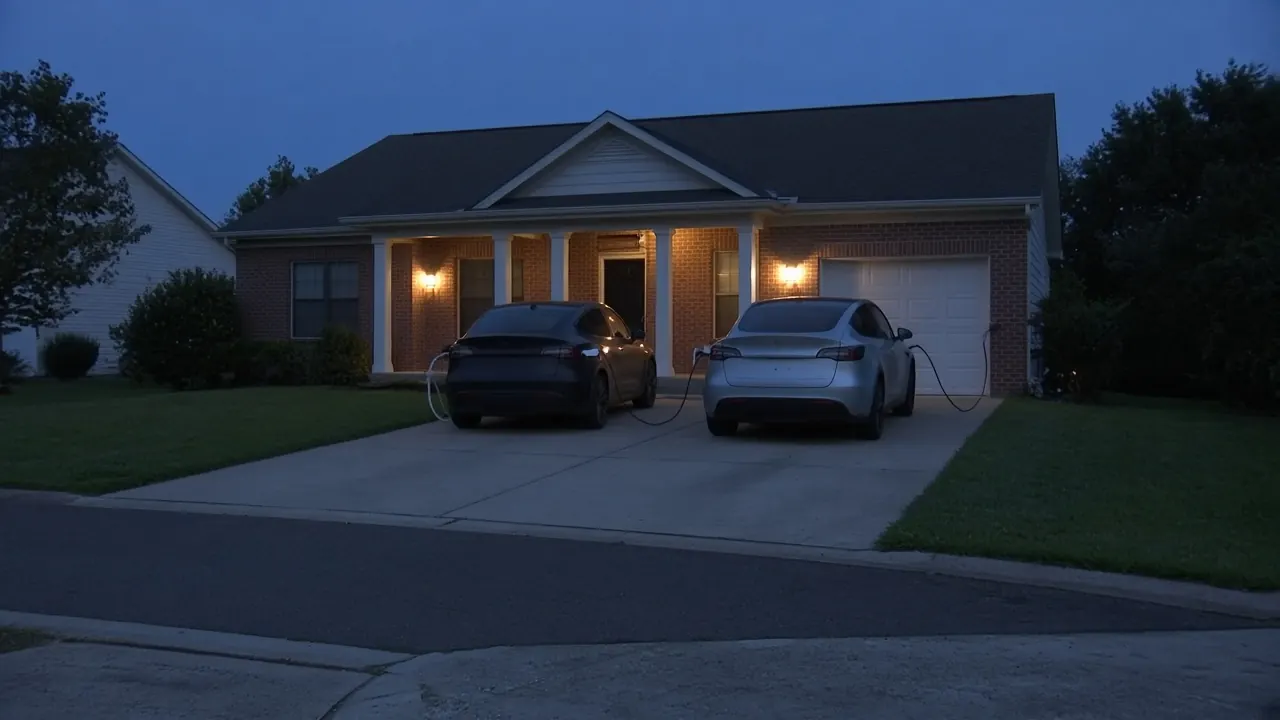
Bidirectional charging is a capability of a vehicle and of the equipment it plugs into, not a brand of charger and not a return on investment. This page follows the U.S. Department of Energy’s Federal Energy Management Program explainer, “Bidirectional Charging and Electric Vehicles for Mobile Storage.” The page was last updated 30 October 2025. The figures and project examples below are the ones on that page. Nothing here is financial, legal, or engineering advice, and a benefit described for a federal site is not a promise about a household bill.
What the Energy Department says a bidirectional EV is
The department writes that bidirectional electric vehicles used as mobile battery storage can add resilience benefits and demand-response capabilities to a site’s building infrastructure. A bidirectional EV, in the page’s definition, can receive energy (charge) from electric vehicle supply equipment (EVSE) and provide energy to an external load (discharge) when it is paired with similarly capable EVSE.
That last clause matters as much as the first. The vehicle has to be able to discharge, and the EVSE has to be able to accept that discharge. The department does not, in that sentence, treat every electric car or every wall charger as bidirectional.
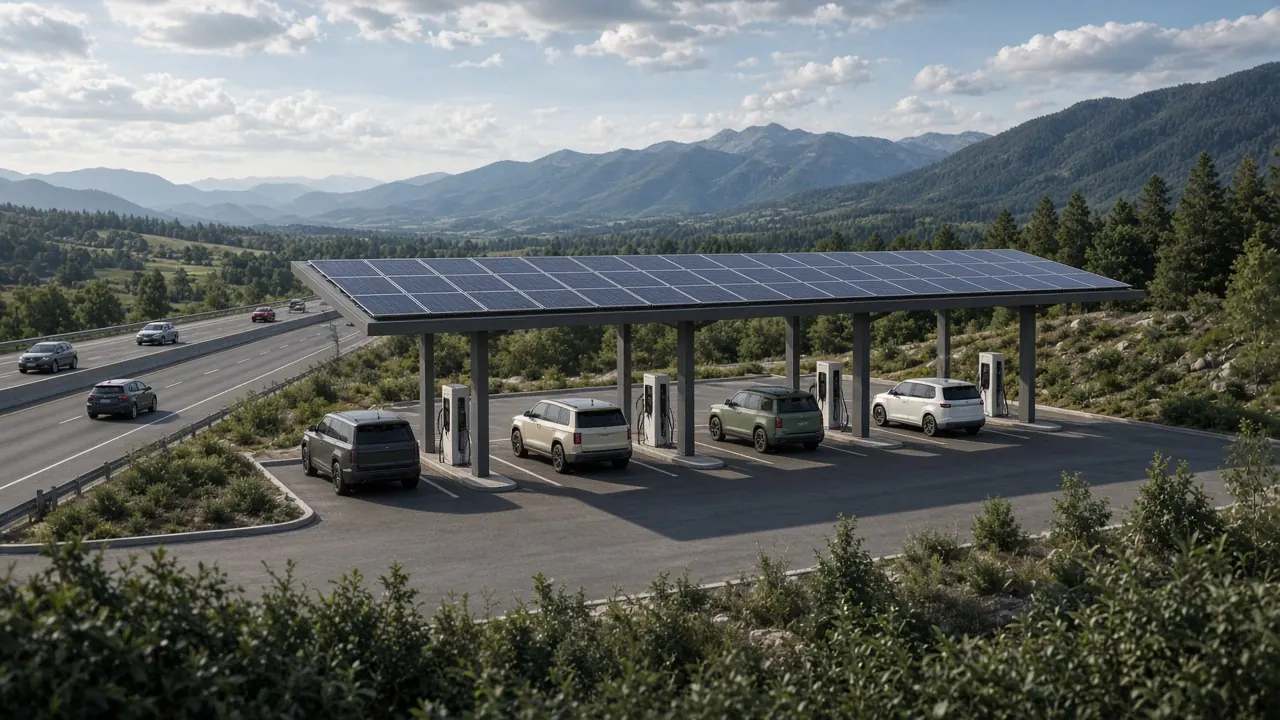
The same page then splits the destination of the discharged energy into two named uses. A bidirectional vehicle can provide backup power to buildings or specific loads, sometimes as part of a microgrid, through vehicle-to-building (V2B) charging, or provide power to the grid through vehicle-to-grid (V2G) charging. V2B and V2G solutions, it says, can complement solar photovoltaic arrays and other distributed energy resources, or supplement diesel generators as backup power.
The contrast the department draws with stationary storage is mobility. Unlike stationary storage and generation, which must stay at a selected site, bidirectional EVs used as mobile storage “can be mobilized to a site prior to planned outages or arrive shortly after an unexpected power outage to supplement local generation or serve as an emergency reserve.”
Scale, as the department describes it
The Energy Department puts a size range on a light-duty EV battery of approximately 15 to 100 kilowatt-hours. Individual bidirectional units, it says, are therefore “ideal for smaller applications like individual buildings, where they can optimize the use of PV and replace or supplement emergency diesel generators.” Larger bidirectional EV fleets can be employed for larger applications. Those are the department’s planning comments, not a rating of any particular model, and the 15-to-100 kilowatt-hour range is the range the page itself gives.
Equipment costs and needs, the page says, vary based on site location, size, design, and more. When planning EV infrastructure, it suggests, sites may consider equipment already on hand, such as an inverter present because of existing solar PV, or a transfer switch present because of an on-site emergency diesel generator. That is a planning note for facility staff, not a shopping list.
Resilience and demand response
Under resilience, the department says mobile batteries can increase a facility’s “resilience posture” while decarbonizing emergency generation. Depending on the situation, this use of EVs for mobile storage can conserve the amount of energy a site uses from the grid, or aid in reaching carbon-emission targets by maximizing the consumption of local and sustainable power generation. Regional fleets, it adds, can be deployed to locations with the highest need in emergency scenarios, which the page presents as an advantage over stationary batteries.
Under demand response, the department says that when planning matches the energy needs of the fleet and the site, bidirectional EV fleets can participate in demand response or time-of-use (TOU) arbitrage. Some utilities, it writes, provide grid-service programs in which devices such as EVSE can be curtailed during peak loads to reduce the burden on grid infrastructure and reduce energy costs. Those markets include frequency regulation, described as short-term balancing of demand and supply. Time-of-use rates, typically designed with on-peak and off-peak prices, are another path the page names: EVSE that can shift charging into lower-cost off-peak periods can decrease the cost of electricity for the fleet. The department says participating in such grid services can save the facility money and aid in reducing brownouts in a utility’s service area during peak loads.
Background
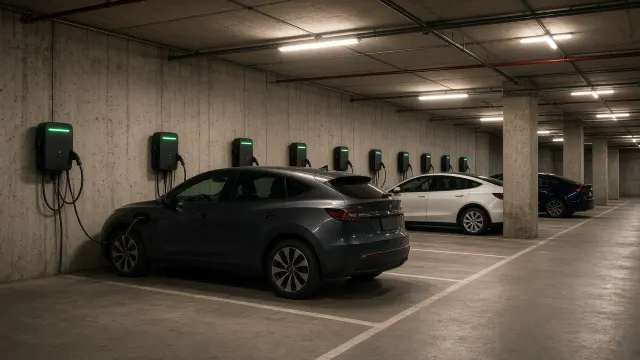
The page also tells federal agencies to communicate with the serving electric utility early, and often, so that rate structures, demand response, and incentives are understood before EVSE is added. Installation, it says, requires planning by both the utility and the fleet operator in advance. Those sentences are written for agency fleets. They are not a prediction that a household will be paid for discharging a car.
Vehicle-to-building and vehicle-to-grid, in the department’s wording
Some V2B applications, the page says, could decrease the cost of grid electricity through time-of-use arbitrage, or increase the value of local generation by consuming all energy produced on site, or avoiding PV curtailment. Many applications, it says, focus on resiliency. Site resilience typically uses a microgrid or backup generation to support building loads in an outage. Some V2B options, the department writes, can power a building on their own, but “most V2B options are best suited to increase the capabilities of an existing backup power solution.”
The page cites Marqusee and Jenket (2020) on the reliability of emergency and standby diesel generators, and it says conventional backup generators do not always function during grid power loss, especially if they are not well maintained. Because of high failure rates for emergency diesel generators, it writes, distributed energy resources and stationary storage have become more prevalent as resilience strategies. Bidirectional charging, in this account, unlocks resilience benefits of EV batteries, offers demand-response capabilities, and can provide backup power.
V2G, as the same page defines it, is a model in which the bidirectional EV battery, when it is not in use for its primary mission, participates in demand management as a demand-side resource. Some utilities may provide a monetary incentive for demand management or load reduction from a zero-emission vehicle fleet. Third parties, the department says, are often interested in developing this arrangement and sometimes provide both the EV and the bidirectional charger through a fleet-as-a-service contract. By being prepared to charge and discharge as a demand-response asset, the page says, battery electric vehicles “generate revenue which aids in justifying the capital costs of the BEVs and the associated support infrastructure.” That is the department’s description of a possible contract structure. It is not a revenue forecast, and it is not a recommendation to buy a vehicle or enter such a contract.
Project examples on the Energy Department page
The explainer lists several examples. Readers should treat them as the department’s cited cases, with the dates and figures the page itself gives, not as a current market survey.
One example is the University of Delaware’s partnership with local electric utilities and with PJM, a regional transmission organization. The department says the university is a registered market participant and “demonstrated the first grid revenue generated from V2G.” Under the terms described on the page, the university’s vehicles are to be plugged in and available when called upon for grid support, and PJM pays the university the market rate for that service, “which has been roughly $1,200 per year per BEV available.” The storage, the page says, is provided through a combination of fleet vehicles and stationary batteries, with Nuvve Corp as the aggregator. The department points to https://crew.udel.edu/v2g/ for more information. The $1,200 figure is the department’s stated “roughly” figure for that arrangement, not a rate available to every driver.
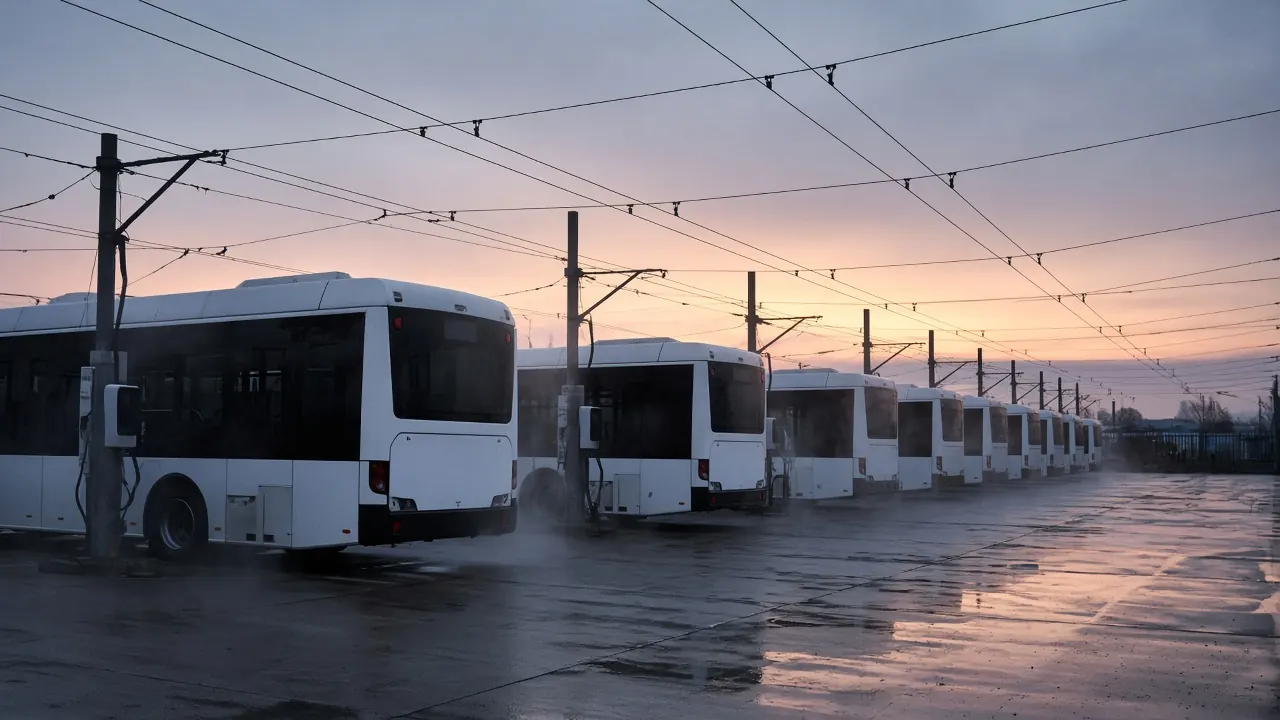
In December 2020, the page says, five battery-electric buses provided by Lion Electric to the White Plains, New York, school district began providing power to Con Edison customers, which the department describes as New York’s first instance of buses feeding power to a utility grid. Another example “set to begin in Brooklyn, New York, in 2022,” it writes, was a partnership among Revel, NineDot Energy, and Fermata Energy to test three Nissan Leaf battery-electric vehicles and three of Fermata’s bidirectional DC chargers at Revel’s Brooklyn maintenance facility, “resulting in 45 kW of on-demand power from the BEVs flowing to Con Edison.” Those are the page’s figures and dates.
Outside the United States, the department describes a project in Denmark involving Nissan, Enel, and Nuvve, working with the utility Frederiksberg Forsyning, to prepare for large commercial V2G systems. The agreement, as the page summarizes it, uses the vehicles to stabilize the national electric grid by enabling the grid operator to charge or discharge the plugged-in vehicles on demand. The total capacity made available at the utility’s headquarters in Copenhagen, the department writes, is approximately 100 kW, and Nissan “gives full warranty on the battery for the vehicles used in the project.” That warranty sentence is the Energy Department’s description of what Nissan provided in that project. It is not a warranty term for other vehicles.
How to read this page
In the Energy Department’s wording, bidirectional charging is charge plus discharge, and it requires capable equipment on both sides of the cable. Vehicle-to-building sends energy to a building or a load; vehicle-to-grid sends energy to the grid. The department discusses both as tools for resilience and for demand management at a site or in a fleet, and it illustrates them with named projects and with figures those projects are said to have produced.
This page does not say that a particular car, charger, or utility tariff will pay for itself, and it does not tell a reader to buy, sell, or enroll in a program. Electricity rates, interconnection rules, and equipment eligibility change. The source for the definition and for the figures above is the Department of Energy page Bidirectional Charging and Electric Vehicles for Mobile Storage, last updated 30 October 2025.