What SAE J3400 and CCS mean for EV charging connectors
In October 2024 the Joint Office of Energy and Transportation said SAE had released the J3400 EV Coupler Recommended Practice, an open standard based on the North American Charging System. The same office explains how CCS1, CHAdeMO, and J3400 differ, and what 23 CFR 680 still requires on federally funded DC fast chargers.
Last updated
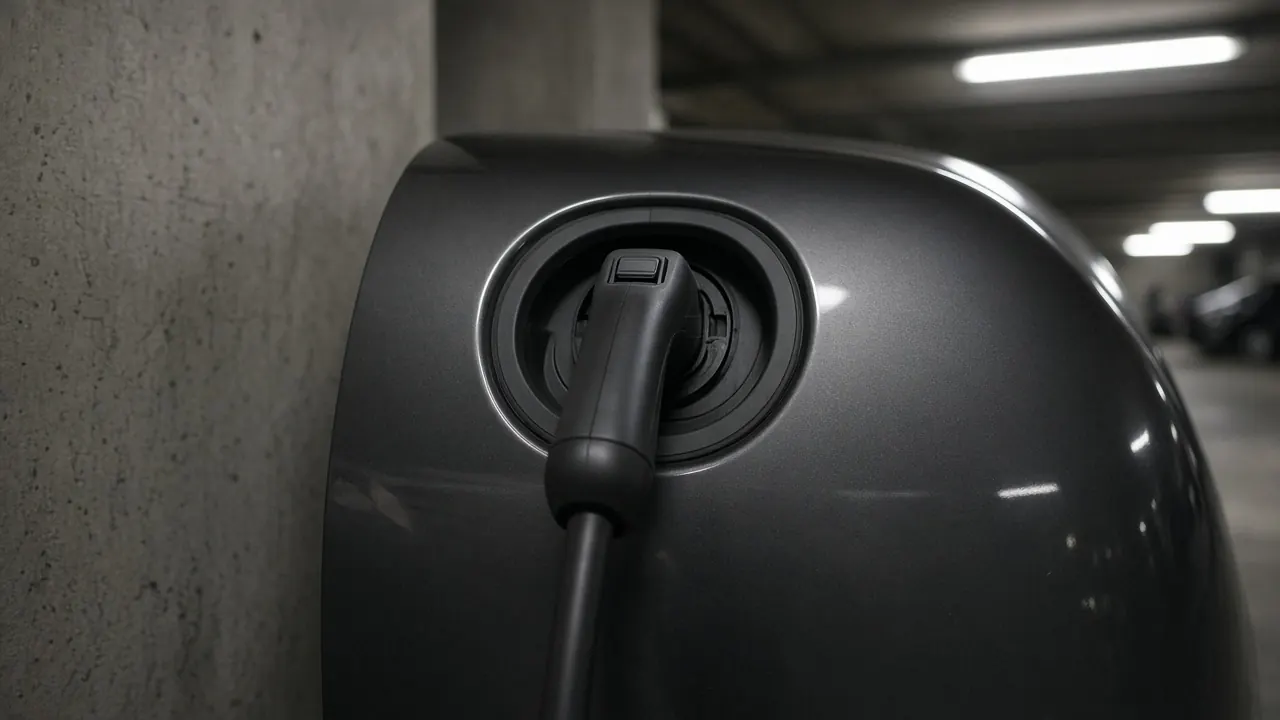
A charging connector is the plug that goes into a vehicle inlet. The names around that plug — NACS, CCS1, CHAdeMO, SAE J3400 — are not interchangeable, and they are not a judgment about which car to buy. This page follows how the Joint Office of Energy and Transportation describes those connectors, and how the same office, on 9 October 2024, described the release of SAE International’s J3400 EV Coupler Recommended Practice. SAE’s own J3400 page calls that document the SAE J3400 Recommended Practice and says it covers requirements for the North American Charging Standard (NACS).
The Joint Office is a U.S. government office. Its pages are primary sources for federal policy and for the office’s own account of the SAE process. They are not a laboratory comparison of every vehicle on the road in 2026, and this article does not invent market-share figures the pages do not give.
What the Joint Office said SAE released
On 9 October 2024, the Joint Office said SAE had released the J3400 EV Coupler Recommended Practice, which the office called “the next step toward an open standard for EV charging hardware.” The office said it had worked with SAE to develop that recommended practice. In the same statement, it said the recommended practice “provides the framework so that any supplier or manufacturer can use and deploy the newly renamed North American Charging System, which provides additional features, functions and interoperability.”
That wording is the office’s. This page does not treat “any vehicle can work with any charger” as an independent test result. The 9 October statement itself says the J3400 standard “helps ensure any vehicle can work with any charger,” and that federal minimum standards for network interoperability “open the way for any charging hardware to work on a different software network.” Those are the office’s claims about the purpose of the standard and of the federal rules, dated October 2024.
The same statement lists two earlier milestones in the office’s account of the work. In December 2023, the Joint Office said it had contributed to the release of the SAE International J3400 Technical Information Report (TIR). In September 2024, it said, the SAE EV Coupler Task Force voted to affirm the J3400 open standard, in collaboration with the Joint Office. SAE’s J3400 collection page is the standards body’s own listing for the recommended practice.
The October statement also gives a build-out figure for context, not as a connector count: between August 2023 and July 2024, the office wrote, approximately 1,000 new public chargers were added per week, funded by a mix of direct federal funding, federal tax incentives, state and local funding, and private investment.
The three DC fast-charging connector types the office names
The Joint Office’s connector explainer says there are three types of DC fast-charging connectors in the United States: CCS1, CHAdeMO, and J3400, the last of which it describes as coming from NACS. Direct-current fast charging, it says, enables rapid charging of electric vehicles.
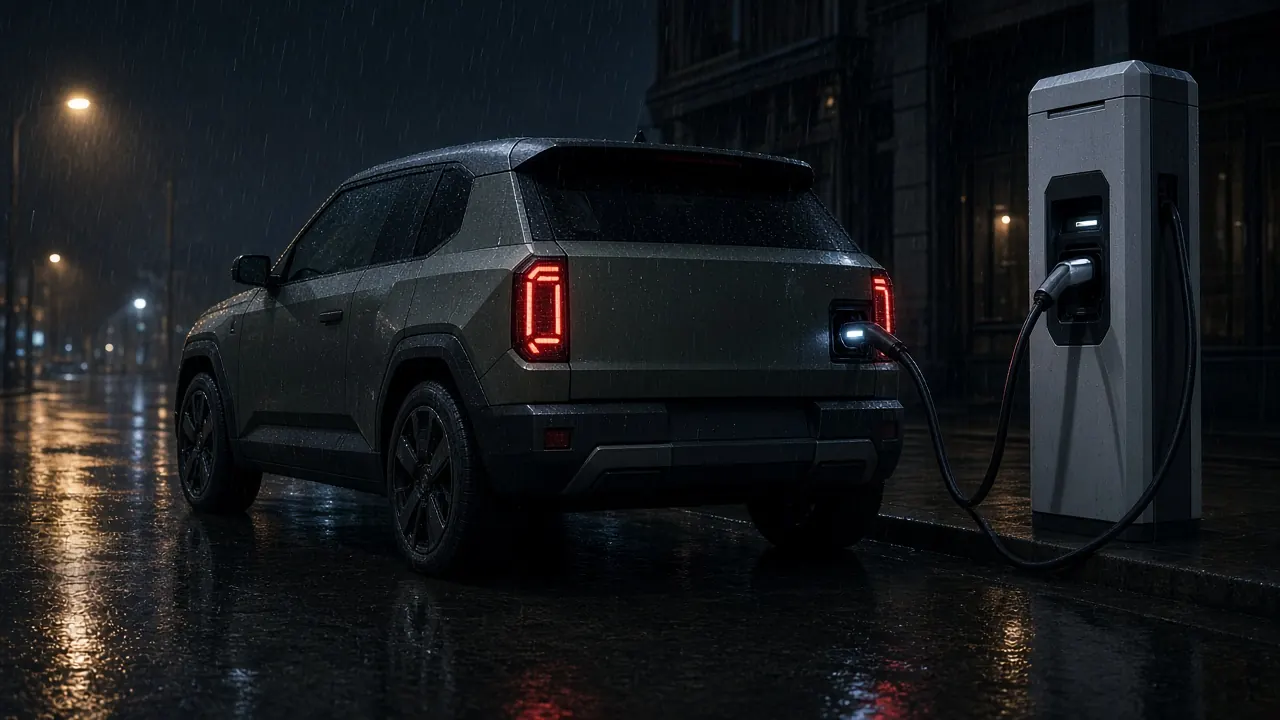
The same page defines the terms it uses:
- A connector plugs into a corresponding vehicle charging inlet and makes an electrical connection. Connectors are also called plugs.
- An adapter is hardware that lets a vehicle connect to a charger it could not connect to directly.
- A charger port, or electric vehicle supply equipment (EVSE) port, can charge a single vehicle. A port may offer more than one connector type, but only one vehicle charges at a port at a time.
- An EV charging station location is a site with one or more charging ports at the same address.
Those definitions are the office’s glossary, not a wiring diagram.
CCS1, NACS, and J3400, as the office defines them
CCS1, the explainer says, is also known as SAE J1772 combo. The Combined Charging System 1 connector uses the same five-pin layout as the SAE J1772 connector used for AC Level 1 and Level 2 charging, with two additional bottom “DC” pins for use with a DC fast charger. The page says CCS1 was standardized through SAE J1772 and “developed by industry over a decade of deliberation and field testing.”
NACS, in the same glossary, “was originally developed by Tesla.” The office says this connector works for AC Level 1, Level 2, and DC charging, “utilizing the same pins for AC and DC power transfer.” It also says NACS is compatible with the J1772 connector for those AC charging speeds through an adapter.
Background
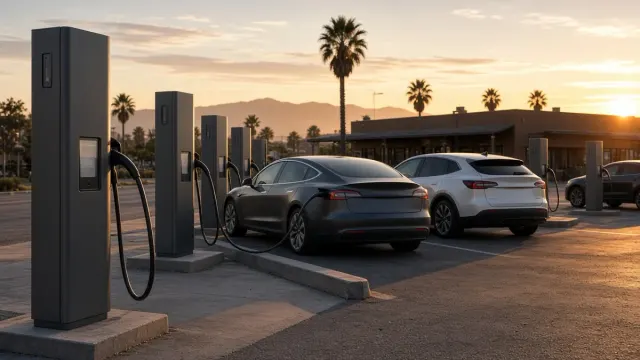
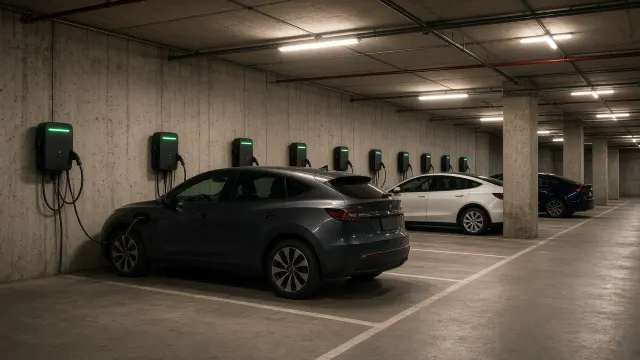
SAE J3400, the glossary says, is the SAE standard for the NACS connector, intended to enable its use across the EV industry. In a December 2023-framed paragraph, the office wrote that SAE International published the Technical Information Report for J3400, “an EV charging connector standard based on the North American Charging Standard (NACS) connector,” and that standardizing NACS as J3400 “ensures that any supplier or manufacturer will be able to use, manufacture, or deploy the J3400 connector on electric vehicles and at charging stations across North America.”
The 9 October 2024 news release is the later, dated account that the recommended practice itself had been released. The explainer page also carries older process language, including a timeline that had expected a recommended-practice document by September 2024. This article uses the dated 9 October release for the fact of that release, and the explainer for the connector definitions and for the federal-rule discussion below.
A timeline on the explainer, written as the office’s estimated schedule, starts in November 2022: “Tesla renames its previously proprietary connector to NACS and opens the standard to make it available to EV manufacturers in North America.” In June 2023, the office says, SAE announced its intent to standardize NACS and formed a task force that the office describes as more than 120 experts from the public and private sectors. The TIR followed at the end of 2023. Those dates are the Joint Office’s chronology. This page does not add claims from company marketing pages that were not opened for this article.
What federal funding rules still required, as the office explained them
Connector choice at a public charger is not only a matter of which standard exists. For federally funded charging, the Joint Office points to 23 CFR 680, which it says includes the minimum standards and requirements for the National Electric Vehicle Infrastructure (NEVI) Formula Program and for publicly accessible chargers funded under Title 23 of the United States Code.
The office’s takeaway is specific. 23 CFR 680, it writes, requires that EV charging stations have at least four network-connected charging ports. Each DC fast-charging port must be capable of charging any CCS1-compliant vehicle, and each charging port must have a permanently attached CCS1 connector. The office says the final rule was modified from its original proposal to allow DC fast-charging ports to have other “nonproprietary” connectors so long as each such port can still charge a CCS1-compliant vehicle.
In May 2023, the office writes, the Federal Highway Administration published requirements that allow J3400/NACS adapters to be installed on all federally funded DC fast chargers “as long as there is also a CCS1 connector.” The explainer’s takeaway sentence is: “Federally funded EV chargers can include a J3400 connector if there is also a CCS1 connector that meets the minimum requirements in the final rule.”
That is a description of the rule as the Joint Office explained it on that page. It is not a substitute for reading 23 CFR 680, and it is not advice about how to apply for a grant. The same page notes that, in March 2024, FHWA, in coordination with the Joint Office, released a request for information on the J3400 connector and potential options for performance-based charging standards, which closed in April 2024, with more information then described as forthcoming. This article does not treat that RFI as a later change to the rule.
Adapters, as the office describes them
Adapters, the explainer says, can be portable or attached as a fixture to a charging station. It gives Tesla’s Magic Dock as an example of an attached NACS-to-CCS1 connector that allows a non-Tesla EV owner to plug in at a Tesla Supercharger station. That example is the office’s, not a test of any particular station.
For federally funded DC fast charging, the office says adapters should be a permanently attached connector, integrated by the charger manufacturer, and the station must meet all 23 CFR 680 standards and requirements, including interoperability, power level, minimum uptime, and certification by a nationally recognized testing laboratory as well as to the appropriate UL standards. It also says J3400 connectors and cables need to be certified for safety via UL 2251, and that J3400, as a then-new standard, would need to meet that certification test before being placed into service.
The page also distinguishes the two adapter directions as it stood when written: adapters that allow J3400 vehicles to use CCS1 chargers “are currently available,” and certified CCS1-vehicle-to-J3400-charger adapters were anticipated in 2024. Those availability sentences are time-stamped to the office’s explainer. This article does not update them against a 2026 product catalog.
How to read this page
SAE J3400, in these official sources, is the SAE recommended practice for the connector that had been called NACS, itself described as originally a Tesla design later opened and then taken through SAE’s process. CCS1 remains the Combined Charging System connector standardized through SAE J1772, and it is the connector 23 CFR 680 requires on federally funded DC fast-charging ports, with other nonproprietary connectors allowed in addition. CHAdeMO is the third DC fast-charging connector type the Joint Office names in the United States.
This page is not a recommendation to buy a vehicle, a charger, or an adapter, and it is not legal advice. Connector fit, adapter safety, and eligibility for federal funding turn on current official documents. The sources for the statements above are the Joint Office’s 9 October 2024 news release, its SAE J3400 charging connector explainer, and SAE’s J3400 page.
Tags
Sources
- Joint Office of Energy and Transportation Continues to Advance an EV Charging Network That Works for All Consumers With Support for the Newly Released SAE J3400 EV Coupler Recommended Practice (external source)
- SAE J3400 Charging Connector (external source)
- J3400 | SAE International (external source)